
OpenAIRE Partners with STARS EU University Alliance
OpenAIRE and the STARS EU University Alliance have entered into a strategic collaboration to strengthen Open Science practices, enhance research visibility, and support evidence-based decision-making across the alliance. Through a dedicated OpenAIRE CONNECT Gateway and MONITOR Dashboard, STARS EU will gain a unified view of research activities and outputs, helping overcome fragmentation between institutions and enabling a clearer understanding of the alliance’s collective scientific contributions.
This partnership will provide STARS EU with the capacity to discover, analyse, and assess research outputs across all member universities, supporting alignment with internal Open Science strategies, boosting regional and international visibility, and opening new opportunities for collaboration. By consolidating outputs into a single, trusted environment, the alliance will be able to identify shared strengths, emerging thematic areas, and strategic priorities for future development.
A shared commitment to advancing Open Science
At the core of the collaboration are two complementary OpenAIRE services: CONNECT and MONITOR.
The CONNECT Gateway will provide a public-facing portal aggregating research outputs from all STARS EU members, improving discovery for students, researchers, institutional leaders, and external partners. Meanwhile, the MONITOR Dashboard will offer evidence-based insights into Open Access trends, levels of collaboration, policy alignment, and thematic contributions, supporting strategic planning at both institutional and alliance levels.
Together, these two services will enable STARS EU to:
- Visualise research outputs across institutions in one place
- Track Open Science adoption and policy alignment
- Identify collaboration patterns and emerging multidisciplinary areas
- Strengthen reporting to stakeholders, funders, and society
- Support informed, data-driven governance
Powered by the OpenAIRE Graph
The CONNECT Gateway and MONITOR Dashboard are powered by the OpenAIRE Graph, one of the world’s the largest and most interconnected scholarly communication databases collecting and linking research outputs (publications, software, data, and more) with projects, funders, researcher identifiers, and institutions. By offering a continuously updated graph of global research activity and relationships, STARS EU benefits from high-quality, enriched, and interoperable research information.
This foundation brings STARS EU into a growing network of European University Alliances, making use of OpenAIRE services to overcome data fragmentation and strengthen cross-institutional collaboration.
A strategic collaboration
The alliance’s move to partner with OpenAIRE responds to three core priorities:
- Building the digital co-creation campus
- Advancing Open Science policies and practices
- Reinforcing dissemination, outreach, and impact.
Because the required infrastructure goes beyond the internal technical capacity of individual universities, STARS EU launched a joint public tender for a shared, open infrastructure platform. OpenAIRE was selected as the provider that best met the alliance’s scientific, technical, and governance requirements, and as a core building block for discovering, disseminating, and monitoring research outputs.
Kick-off milestones and the road ahead
The partnership was officially launched on 2 December 2025 with the successful completion of the kick-off meeting. During this first milestone, OpenAIRE delivered the customised CONNECT Gateway and the MONITOR Dashboard, giving all nine partner universities a shared infrastructure to discover, visualise, and analyse their research outputs under a common identity. The first demonstrations highlighted clear opportunities to support Open Science practices across the alliance.
From early 2026, the collaboration enters an implementation and refinement phase. Universities will establish small working groups to refine data sources, curate institutional records, and configure their Gateways. OpenAIRE will provide targeted training on CONNECT, MONITOR, and data curation, as well as guidance on repository onboarding and dashboard management. This collaborative process will ensure that each institution strengthens its capacity to manage research information and adopt shared Open Science workflows. By the end of the year, the alliance will not only operate a unified infrastructure but also reinforce its commitment to transparency, collaboration, and evidence-based research assessment.
- “I am particularly excited that, with OpenAIRE, we will for the first time gain a clear, shared view of the research landscape across all nine STARS EU universities. The CONNECT gateway and MONITOR dashboard will turn our Digital Campus into a living map of our scientific strengths, collaborations, and emerging themes. It is a foundation we need to plan joint programmes, better support our researchers, and communicate our impact more effectively.” Prof. Daniel Stavárek, Silesian University in Opava, leader of WP5 STARS EU Co-Creation Campus and member of the STARS EU Steering Committee.
- “Today, it is surprisingly hard to answer simple questions such as: How much of our research is open access? Where do our teams collaborate most? Which topics are gaining momentum across the alliance? MONITOR and CONNECT will help us overcome this fragmentation. They give us a shared evidence base for decision-making, from designing new curricula to prioritising support for researchers and engaging with our regions.” Prof. Ernesto Pereda, Dean and Professor of Electrical Engineering at the University of La Laguna and member of the STARS EU Steering Committee.
- “European University Alliances like STARS EU are reshaping how research is organised, assessed, and shared. With CONNECT and MONITOR, our goal is to provide an open, trusted infrastructure that helps alliances move from fragmented institutional views to a truly collective understanding of their research activities. This collaboration shows how Open Science can directly support strategic governance, collaboration, and evidence-based decision-making at alliance level.” Giulia Malaguarnera, Outreach & Engagement Officer, OpenAIRE
(Originally published on OpenAIRE website by Alane Brunschweiger and Giulia Malaguarnera).

Related Posts

STARS EU provides training to its members on Open Science and Open Data
This online programme will take place on 19, 22, 24 and 26 April.

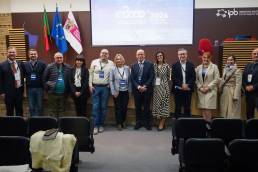
Bragança Polytechnic University hosted the successful 2nd Edition of IN2COP with STARS EU partners
The event served as a platform for reflection and the sharing of insights…

Three of our partners set in motion the project INNlocal
It will focus on the search for solutions for new local public policies to meet…