
The STARS EU annual meeting began in Opava, focusing on teaching innovation
March 26, 2026
The annual conference of the STARS EU alliance was inaugurated yesterday, Wednesday the 25th, and will run until Friday the 27th of March, under the motto “Transformative Education for the Future of Europe ” , as this time the meeting has emphasized teaching innovation .
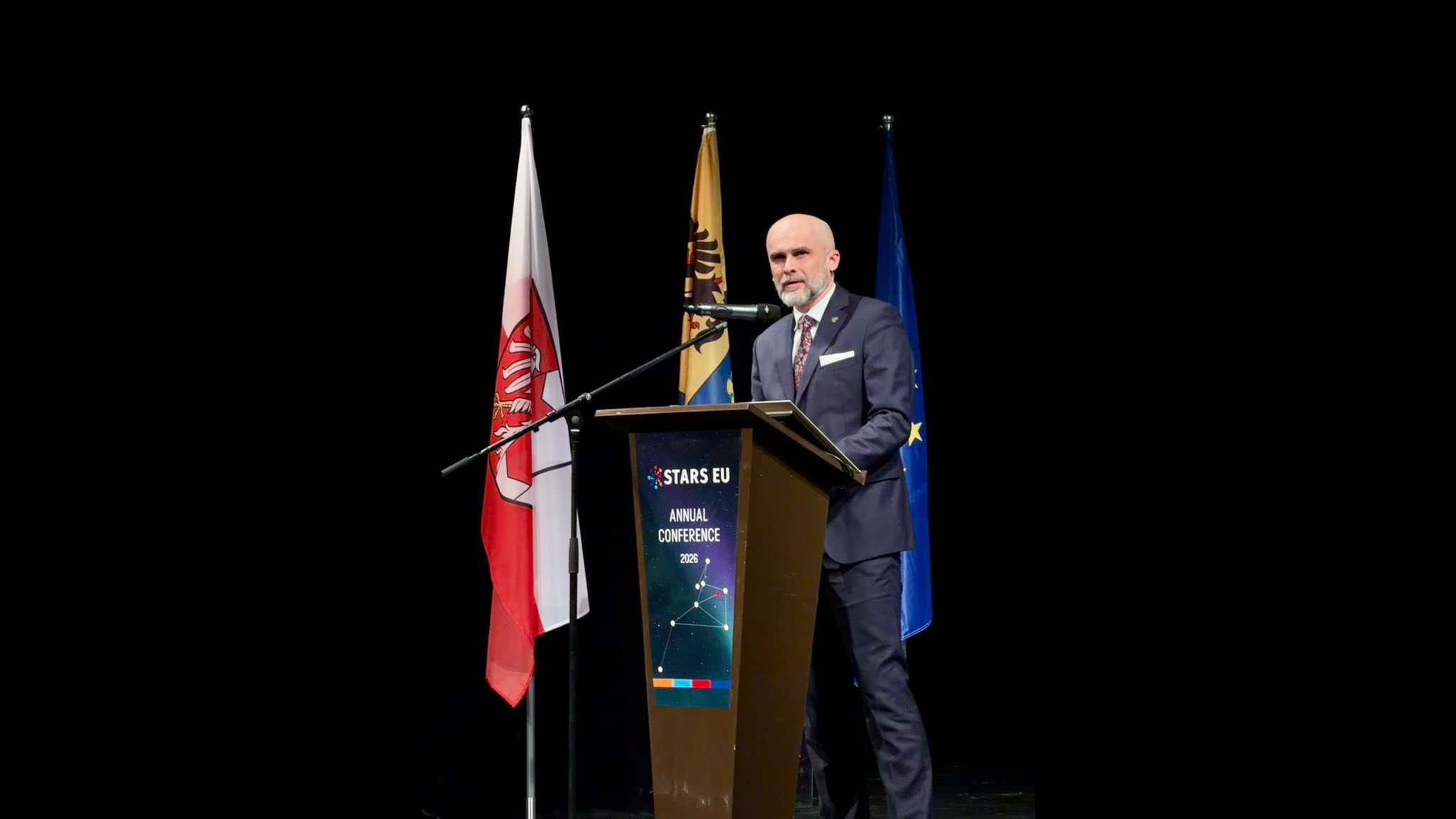
The morning featured an opening ceremony held at the Silesian Theatre, which included speeches by the Rector of the Hanze University of Applied Sciences (Netherlands ) and coordinator of the alliance, Dick Pouwels; the Rector of the host center – Silesian University in Opava – , Tomáš Gongol ; the Deputy Director of the Czech National Agency for International Education and Research, Roman Klepetko; the Deputy Governor of the Moravian – Silesian Region , Jan Veřmiřovský ; and the Deputy Mayor of the city of Opava , Michal Kokošek .
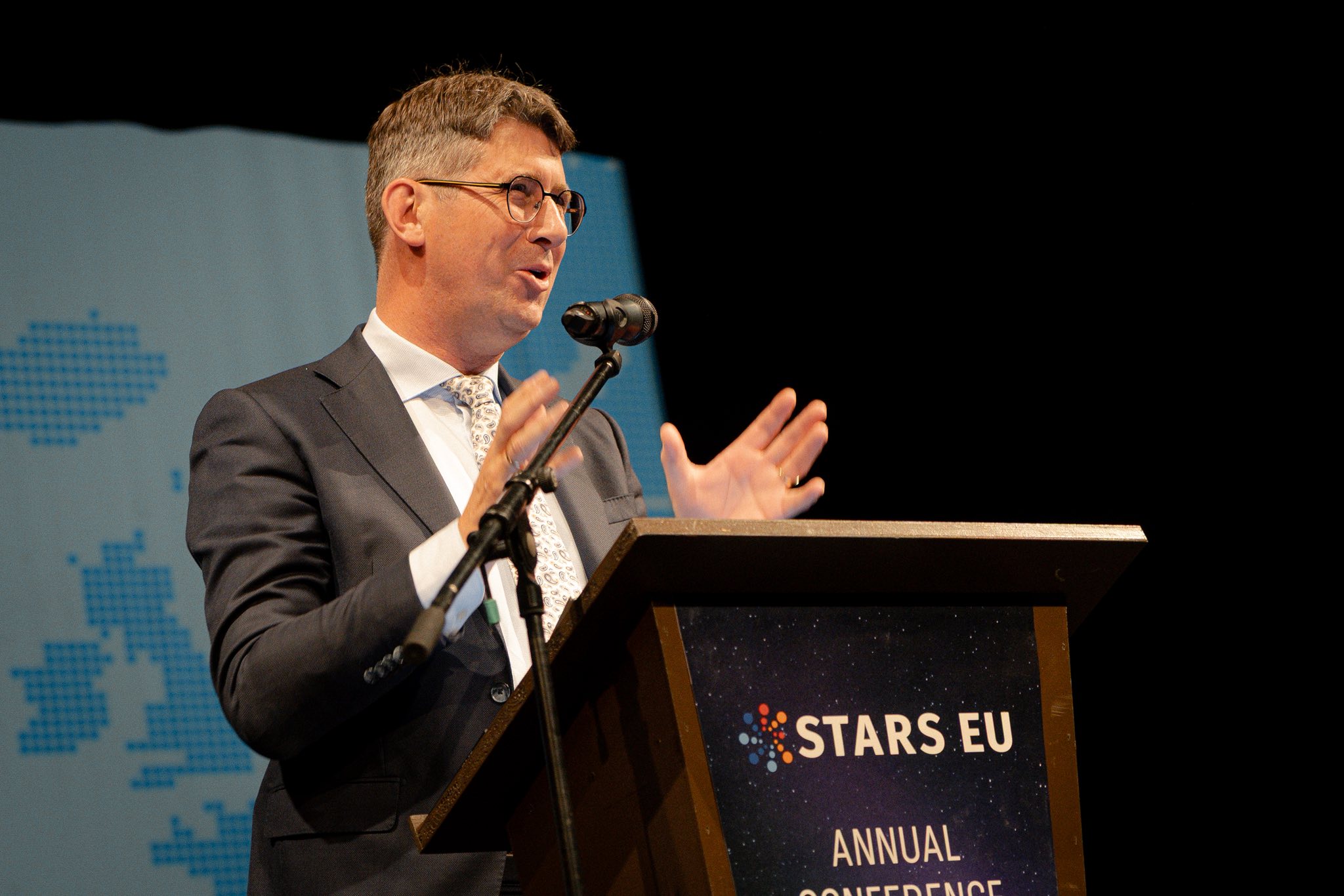 Emphasis was placed on how higher education possesses enormous transformative potential, not only for individuals in terms of their professional and civic development, but also for the regions in which they live. Education in this broad sense has become a fundamental value, especially at a time like the present, when international political instability requires greater adaptation to uncertainty.
Opening address
It was precisely this uncertainty that was the subject of the inaugural lecture by Elinor Vettraino, from Aston University in Birmingham (United Kingdom), whose title “The Human Algorithm ” already makes clear her commitment to a bolder , group-based, critical and open university education to face this instability.
The speaker advocated for an educational paradigm capable of responding to the challenges described by the BANI framework, established by Jamais Cascio in 2020 to try to interpret a chaotic world . It stands for Brittle, because systems can collapse in the face of small failures ; Anxious, due to constant uncertainty; Nonlinear, Regarding the disproportion between causes and effects; and Incomprehensible, due to the information overload and complexity of many phenomena .
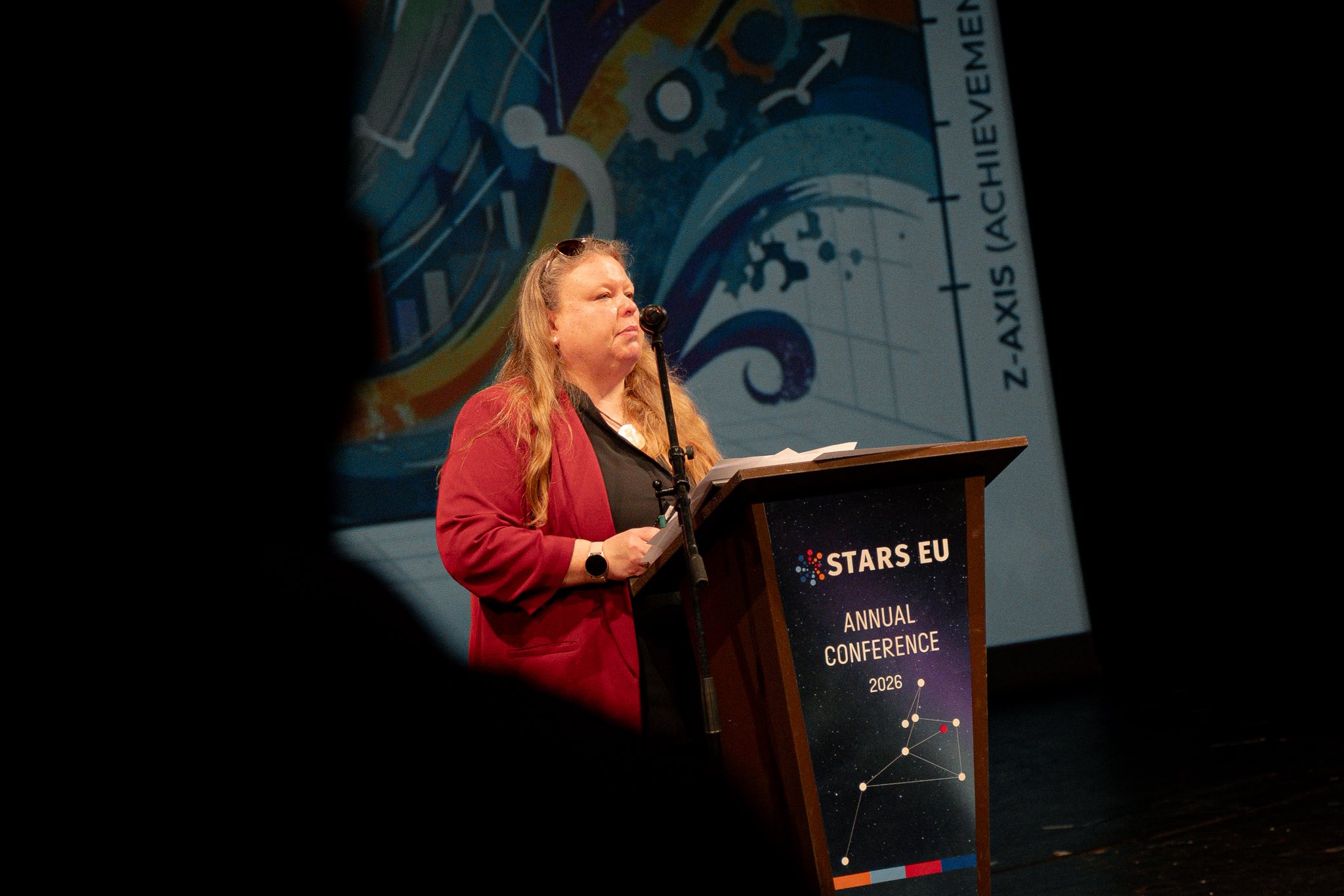 Vettraino explained that to address this paradigm, individuals must become cognitively ambidextrous, capable of combining the predictive logic of science and formal education with a more adaptive, creative logic .
Translating this duality to the educational sphere requires offering a freer and more open teaching style in which students are more involved in their own learning process. This is not mere theory , and he gave examples of institutions already implementing these practices , such as The London Interdisciplinary School, among others.
With all this in mind, the expert proposed a three-dimensional educational model capable of addressing these challenges, with an X-axis representing Enhancement and Elevation, a Y-axis representing Interpretation and Connection, and a Z-axis representing Exploration and Experience. This presentation and the entire opening ceremony are available on the alliance ‘s YouTube channel.
Simultaneous sessions
Following the opening, the session moved to the Faculty of Public Policy , the venue for the working meetings, where the morning session featured two simultaneous open debate panels : “Human centered Artificial Intelligence and flexible pathways : making a truly transformative digital transformation”; and “ From the classroom to the region : transformative education as an engine for the European transition ”.
 The first panel addressed how to move from a technocentric, tool-based view of AI to a more human – centered one. While universities have been adopting AI since 2022, the time has come to create ecosystems, increase its educational potential, and integrate this technology into the curriculum . Expanding digital literacy is also necessary , as there is a gap between faculty and students. Another challenge raised is using AI critically and ethically.
The alliance’s working group is compiling innovative experiences with artificial intelligence being carried out by academic institutions of STARS EU, with the aim of co-creating AI-based solutions for all sectors in all areas .
The second panel addressed the importance of making the university a more accessible space for new generations, as they are the leaders of the future . The importance of involving the organizations, institutions, and companies behind universities in the process of transforming education was also mentioned .
Regarding how to change and adapt the academic curriculum , the discussion focused on flexibility, adaptability , and the essential shift in mindset. As for the challenges universities face, the panel highlighted the need to increase stakeholder engagement and the ability to expand from the local to the regional level .
In the afternoon, there were two other joint sessions: “ Coaching for courage: Team-Entrepreneurship as a vehicle for Transformative Education ” , and “ Practice: Turning European Initiatives into Transformative Learning ”.
The first discussion focused on team work as a training tool. Its advantages were presented, such as the fact that students can define their role within a group, but its effectiveness was also questioned, and it was suggested that in some cases, overuse of this methodology can overwhelm students.
It was also clarified that all teams are groups, but not all groups are teams. To create teams, it is necessary for members to have mutual understanding and develop empathy . Another issue raised was the importance of creating safe environments in the classroom so that students can experiment and make mistakes in order to learn from them. “We don’t learn from mistakes, but rather when we reflect on them.”
The second panel emphasized the need to give more space to younger generations , considered key as future leaders , as well as to promote a change of mentality towards universities that are more open , innovative and connected with their environment.
One of the main themes of the debate is challenge-based learning. Examples presented included MSIC Lab Zero, where companies pose challenges that students address by proposing solutions, and academic programs in which students collaborate with municipalities to solve specific problems, such as population decline . This approach allows for the application of knowledge in real-world contexts and generates a direct impact on both society and regional development.
Furthermore, the importance of involving all stakeholders surrounding the university — public administrations , businesses, and civil society — was highlighted , creating ecosystems of collaboration and innovation . This cooperation not only strengthens student training but also contributes to the economic and social development of the regions.
The panelists agreed on several significant obstacles , including rigid curricula, bureaucracy, slow institutional change processes, and resistance to modifying traditional structures. For this reason, they emphasized the need to introduce greater flexibility and adaptability into curricula , as well as to effectively integrate these practical approaches into teaching .

Related Posts
STARS EU places education at the heart of Europe’s future in its third annual conference
The event, to be held at Silesian University in Opava, will take place from 25…


The new episode of STARS EU Highlights positions universities as drivers of social change and regional development in Europe
The videopodcast highlights students’ involvement in community initiatives,…

FutureLab Camp 2026 in Belfort: international students develop solutions for regional transformation
This second edition of FutureLab Camp, held on 2–6 March 2026 in Belfort…