


About the night
Europe’s great science festival
European Researchers’ Night is Europe’s great science festival: an event that opens the doors of laboratories and universities to bring researchers and the public together through inspiring, interactive activities for all ages. This year, the celebration takes place with STARS EU!
Every year, on the last Friday of September, millions of people explore the world of research through experiments, demonstrations, exhibitions, talks, quizzes, and hands-on experiences. It is a unique opportunity to see first-hand how science and innovation impact everyday life, to ask questions directly to those conducting research, and to discover the work being carried out at universities and research institutes across Europe. An event that attracts more than 1.5 million visitors across the continent.
More than an open-door night, it is an invitation to imagine possible futures. The aim is to inspire young people to choose careers in science and research and to strengthen the link between research and society. By showing how research helps to address the major challenges of our time, European Researchers’ Night highlights the key role played by researchers in building the future we want.
From STARS EU, a belief is held in research with real impact. For this reason, an invitation is extended to experience Researchers’ Night 2026 at any of the nine partner universities of the Alliance.
Programme
STARS EU activities
Below, the activities carried out within the framework of STARS EU are presented.
Aleksandër Moisiu University of Durrës
AlbaniaSTARS EU Alliance Corner at UAMD
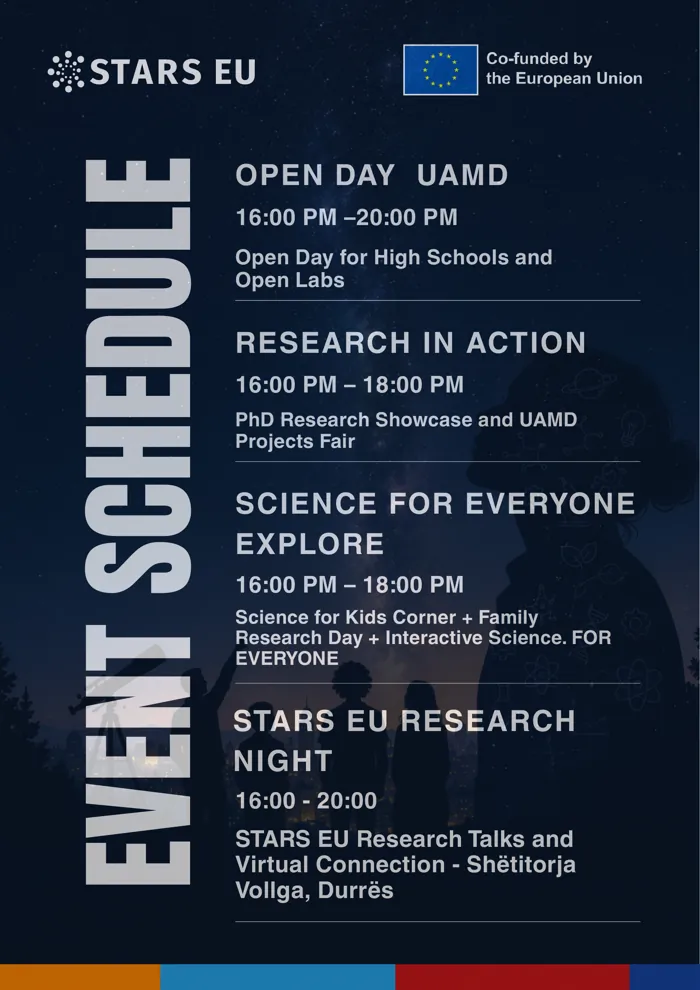
UAMD opens its doors for Researchers’ Night with an Open Day for high schools and open labs, a PhD Research Showcase and Projects Fair, science activities for kids and families, and the STARS EU Research Night with research talks and a virtual connection from Shëtitorja Vollga, Durrës.
See full programme
Aleksandër Moisiu University of Durrës (UAMD)
25 September 2026 · All-day event
- Open Day UAMD16:00 – 20:00Open Day for high schools and open labs.
- Research in Action16:00 – 18:00PhD Research Showcase and UAMD Projects Fair.
- Science for Everyone: Explore16:00 – 18:00Science for Kids Corner, Family Research Day and interactive science for everyone.
- STARS EU Research Night16:00 – 20:00STARS EU Research Talks and virtual connection – Shëtitorja Vollga, Durrës.
Bragança Polytechnic University
PortugalSTARS EU joins European Researchers’ Night in Bragança
On 25 September, STARS EU will join the European Researchers’ Night in Bragança, Portugal, as part of the activities locally organised by the Centro Ciência Viva de Bragança, with the participation of Bragança Polytechnic University (UPB). From 5 p.m. to 11 p.m., Alexandre Herculano Street in the city centre will become an open space for science, bringing researchers and the community together through experiments, demonstrations, games, and interactive activities for all ages.
Read more
Meet STARS EU
As part of the programme, STARS EU will have its own stand, offering visitors the opportunity to learn more about the European University Alliance, its community and the collaboration taking place across its partner universities.
The presence of STARS EU adds a European dimension to an evening dedicated to bringing science, research and innovation closer to society, highlighting how cooperation between universities can connect knowledge, people and regions across Europe.
What else can you discover?
Throughout the evening, researchers and teams from UPB, together with partner organisations, will invite visitors to explore science across a wide range of fields, including:
- Plants and biotechnology – in vitro culture, hydroponics and sustainable production;
- Bees and beekeeping – discovering the world of bees and beehive products;
- Soils and sustainability – exploring the importance of soil for ecosystems;
- Food and olive oil – science applied to food, quality and nutrition;
- Technology and intelligent systems – interactive experiences connecting technological research with everyday life;
- Health and wellbeing – activities exploring different dimensions of active and healthy living;
- Education, tourism, and society – games and challenges that show how research contributes to these areas.
UPB’s participation will involve teams from Mountain Research Center, CeDRI – Research Center in Digitalisation and Intelligent Robotics, Transdisciplinary Research Center in Education and Development (CITeD), LiveWell – Research Center for Active Living and Wellbeing and UNIAG – Applied Management Research Unit, alongside other university structures and partner organisations, including MORE CoLAB and AquaValor.
Science in motion
The programme will also extend to Praça da Sé, where, from 5 p.m. to 8 p.m., UPB’s Sports and Wellbeing Office will invite participants to get active with:
- Table tennis
- Teqball
- Pickleball
- Zumba
Practical information
- Date: September 25, 2026
- Time: 5 p.m. to 11 p.m.
- Location: Alexandre Herculano Street, Bragança, Portugal
- Sports activities: 5 p.m. to 8 p.m., Praça da Sé
Cracow University of Technology
PolandMałopolska Researchers’ Night 2026
Krakow University of Technology opens its faculties with 54 hands-on activities: 3D printing, virtual reality, underwater and humanoid robots, telescope observations of the Moon and Saturn, a tram simulator, electric and hydrogen racing cars, chemistry shows and much more.
See full programme
Faculty of Mechanical Engineering
37 Jana Pawła II Avenue, 31-864 Kraków – Czyżyny Campus
- From Idea to Print – 3D in Action!18:00–22:00 | Room A307See how a digital design becomes a physical object and discover the successive stages of the 3D printing process.
- Virtual Threat, Real Safety – Test Yourself in VR!18:00–22:00 | Hall A638Interactive VR scenarios provide a safe environment for practising responses to fires, emergencies and other hazardous situations.
- Virtual Reality in Production Planning18:00–22:00 | Room B03A demonstration of how virtual reality can support the design and preparation of modern production processes.
- 3D Printing in Production Engineering18:00–22:00 | Room B06See 3D printers in operation and follow the process from a digital model to a physical component.
- Pinball Frenzy and the Maze of Emotions18:00–22:00 | Room B08Student-built projects combining mechanics, electronics and elements inspired by classic games.
- Measure with a Laser18:00–22:00 | Room C01A practical demonstration of laser technology used for precise measurements.
- Scanning with Light18:00–22:00 | Room C01Discover technologies that use light to create accurate three-dimensional representations of physical objects.
- Industrial Measurements18:00–22:00 | Room C01Find out how industry verifies whether manufactured components meet design specifications and how their quality is controlled.
- Seeing the Invisible18:00–22:00 | Room C01Discover industrial computed tomography, which makes it possible to look inside an object without destroying it.
- The Sky over Kraków – the Moon, Saturn and Eclipses18:00–19:00 | C04 Auditorium; 19:00–22:00 | Faculty car parkAn introduction to astronomical observation followed, weather permitting, by telescope observations of the Moon and Saturn.
- Underwater Robots18:00–22:00 | Room E07/C/1A presentation of robots designed to operate underwater and the technologies used to control them.
- Autonomous Mobile Robots18:00–22:00 | Room E07/C/2Discover how robots recognise their surroundings, navigate autonomously and perform programmed tasks.
- Humanoid Robot18:00–22:00 | Room E07/C/2Meet a humanoid robot combining mechanical engineering, automation, electronics and computer science.
- Industrial Robots18:00–22:00 | Rooms E09 and E07/C/3Demonstrations of the operation and programming of robots used in modern manufacturing.
- Young Thermodynamicist AcademyStarts at 18:00, 19:00, 20:00 and 21:00 | approx. 45 min | Hall E08A journey through four laboratory stations exploring temperature, pressure, refrigeration and renewable energy. The experience concludes with a short “exam” and a diploma.
- Thermal Imaging and Engraving18:00–22:00 | Room E10Discover thermal imaging technology and the practical capabilities of modern engraving equipment.
- Can We Design the Future?Starts at 18:00, 19:00, 20:00 and 21:00 | 45 min | Room E12AInteractive workshops exploring how possible future scenarios can be analysed and designed. Groups of up to 16 participants. Registration required.
- Engine Dynamometer18:00–22:00 | Building G, Engine Laboratory, ground floorSee how combustion engines are tested and how their technical and operating characteristics are determined, including their environmental performance. Maximum 12 participants per demonstration.
- NGT6 Tram Simulator – Demonstration and Driving Experience18:00–22:00 | Room J29Take the driver’s seat and experience operating an NGT6 tram simulator. Each session lasts approximately 10–15 minutes. Places are limited. Registration required.
- Jotkowo Railway Station Model18:00–22:00 | Room J29A realistic railway model featuring signals, points and signalling systems, demonstrating the principles of railway traffic control.
- Vehicle Inspection Station – A Car Under the Microscope18:00–22:00 | Hall J31See how a professional vehicle inspection is carried out using a complete diagnostic testing line.
- Students’ Racing Passion – MP2 and MP3 Electric Racing Cars18:00–22:00 | Hall J33A presentation of Formula Student electric racing cars developed by the PK MechPower team, including vehicles from previous seasons and the latest design.
- VR – Explore a World Without Limits18:00–22:00 | Room J207.1Games and applications showcasing the possibilities of virtual reality and its applications in engineering.
- Electronics in Motion18:00–22:00 | Room K125Build a game controller using an acceleration sensor and discover how microprocessor electronics can respond to human movement.
- How Strong Are a Squirrel’s Teeth? The Secret of Cracking Nuts18:00–21:45 | demonstrations every 15 minutes | Room K126Use a materials testing machine to investigate the force required to crack different types of nuts.
- Why Do Surgeons Need to Know How to Suture?18:00 and 20:00 | approx. 1.5 hours | Room K127Learn the basics of surgical suturing techniques using specialist training models. Maximum 15 participants per session. Registration required.
- What Do Balloons Have in Common with Surgical Gloves?18:00–21:45 | demonstrations every 15 minutes | Room K128Experiments demonstrating how the properties and strength of flexible materials can be tested.
- The Secrets of Waterproofing18:00–21:45 | Room K128Experiments involving droplets, waterproofing agents and hydrophobic surfaces – from lotus leaves to waterproof clothing.
- Hydrogen-Electric Hybrid Racing Car18:00–22:00 | outdoor area between Buildings J and KA presentation of a student-built racing car powered by a hybrid hydrogen-electric system. Passenger rides are planned.
- Lizard – A Vehicle for Wheelchair Users18:00–22:00 | outdoor area between Buildings J and KAn electric four-wheeled vehicle designed so that a wheelchair user can enter it directly without transferring from the wheelchair. Passenger rides are planned.
Faculty of Architecture
24 Warszawska Street, 31-155 Kraków
- Build Your Holiday Dreams!17:00–19:00 and 19:00–21:00 | Room 6 | up to 15 participants per sessionA creative architecture workshop inviting participants to design and build their own visions inspired by holiday dreams.
Faculty of Electrical and Computer Engineering
24 Warszawska Street, 31-155 Kraków
- Microcontroller Laboratory and the Microcontroller Student Research Club18:00–21:00 | Room 208eA presentation of microcontrollers and their practical applications in electronics and automation.
- IT Systems Design LaboratoryRoom 101B | time not specifiedDiscover the environment in which modern information systems are designed and developed.
- Renewable Energy Sources Laboratory18:00–21:00 | Room 05Demonstrations of technologies related to renewable energy generation and use.
- Building Automation Laboratory18:00–21:00 | Room WA-202Find out how automation systems control installations and equipment in modern smart buildings.
- 3D Printing Laboratory18:00–21:00 | Room WA-203A demonstration of additive manufacturing and the process of creating physical objects using 3D printing.
- High Voltage Technology Laboratory18:00–21:00 | Room 010Demonstrations involving high voltage and electrical phenomena encountered in power engineering.
Faculty of Civil Engineering
24 Warszawska Street, 31-155 Kraków
- Painting Other Worlds17:00–20:00 | GIL Gallery, Room S2A creative activity combining science with an imaginative exploration of materials and the world around us.
- Robot Demonstrations17:00–20:00 | every 30 minutes | GIL Gallery, Room 114 | max. 8 participantsDiscover robots and their potential applications in engineering. Registration: nocnaukowcow@pk.edu.pl.
- What Are the Student Research Clubs Working On?17:00–20:00 | GIL Gallery Reading RoomA presentation of projects, ideas and activities developed by student research clubs.
- VR Demonstrations17:00–20:00 | every 30 minutes | GIL Gallery, Room S3 | max. 8 participantsExperience how virtual reality can be used in engineering, design and visualisation. Registration: nocnaukowcow@pk.edu.pl.
Faculty of Environmental Engineering and Energy
37 Jana Pawła II Avenue, 31-864 Kraków – Czyżyny Campus
- Heat Under Control – How Modern Heating Systems Work TogetherBuilding E, Laboratory Hall, Laboratory E93 | time not specifiedSee how modern equipment and installations work together to generate, distribute and use heat efficiently.
- How Is Electricity Generated? From Heat, Wind and Sunlight to Electric Powercorridor between Buildings C and D – student area | time not specifiedDiscover different ways of converting thermal, wind and solar energy into electricity.
- From Sunlight to Hydrogen – How to Store Renewable Energycorridor between Buildings C and D – student area | time not specifiedA presentation exploring renewable energy storage and the potential of hydrogen as an energy carrier.
Faculty of Materials Science and Physics
37 Jana Pawła II Avenue, 31-864 Kraków
- Where Does Cold Come From? Heat and Cooling in Everyday Life and Beyond18:00–18:40, 19:00–19:40, 20:00–20:40, 21:00–21:45 | A1 Auditorium in the Faculty of Mechanical Engineering buildingA demonstration explaining temperature, heat transfer and cooling phenomena encountered both in technology and in everyday life.
Faculty of Chemical Engineering and Technology
24 Warszawska Street, 31-155 Kraków
- Everything Flows – What Is Viscosity?18:00–21:00 | Room 129Experiments demonstrating viscosity and explaining why different substances flow in very different ways.
- Beauty Studio at Home18:00–21:00 | Room 638Discover the chemistry behind cosmetics and personal care products through practical experiments.
- 3D Printing in Action!18:00–21:00 | Faculty lobbySee 3D printing technology in operation and follow the process of turning a digital model into a physical object.
- Fractals – A Graphic Representation of Chaos18:00–21:00 | Room 202Explore mathematical structures and fractals and see how remarkably complex forms can emerge from simple rules.
- The Nanoworld – Chemistry Powered by Light18:00–21:00 | Room 210Journey into the world of nanomaterials and discover chemical processes driven by light energy.
- The Magic of Foam – From Droplets to Giants18:00–21:00 | Room 617Experiments with foam and bubbles revealing fascinating phenomena occurring at the interface between liquids and gases.
- Chemistry or Magic?18:00–21:00 | Room 29Spectacular chemical experiments demonstrating that phenomena which appear magical have scientific explanations.
- Caught in a Spider’s Web…18:00–21:00 | Room 517A demonstration exploring materials, structures and chemical phenomena inspired by spider webs.
- Laboratory of Light18:00–21:00 | Room 231Experiments exploring light, its properties and its interactions with matter.

Hanze University of Applied Sciences
The NetherlandsSTARS-Health aims to create impact through research
Hanze University of Applied Sciences wants to highlight an increasingly important aspect of healthy ageing: how older adults interact with digital health services. To this end, it develops the European STARS-Health project, a European research project developed within the framework of the STARS EU Thematic Interest Group (TIG) Healthy Ageing.
The project explores the needs and challenges of people with lower levels of health or digital literacy, with the aim of creating solutions that make healthcare more accessible, inclusive, and effective for all older adults.
Discover the STARS-Health projectHochschule Bremen – City University of Applied Sciences
GermanyResearchers at Schools
As part of the European University Alliance STARS EU, researchers from HSB will visit upper-secondary classes at schools in Bremen in a pilot of the ‘Researchers at Schools’ programme. In accessible 20-minute talks, they will present their work and then engage in discussion with the pupils.
Read more on the HSB website (opens in a new tab)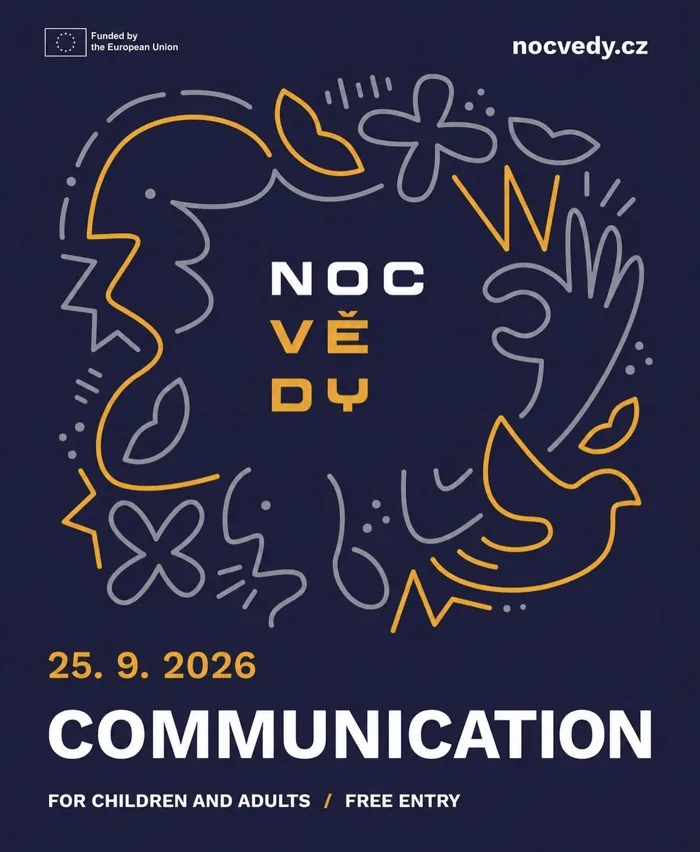
Silesian University in Opava
CzechiaNight of Science (Noc vědy): Communication
Silesian University in Opava takes part in the Czech Night of Science, this year under the theme “Communication”: 32 activities across its faculties in Opava and Karviná, the Institute of Physics and the Petříkov Observatory in Jeseník, from library adventures and communication quizzes to planetarium shows and night-sky observation.
Silesian University on nocvedy.cz (opens in a new tab)See full programme
Faculty of Public Policies in Opava
- University Library – An Adventure in the Labyrinth of Communication17:00–20:00; every 20 minutes
- University Library – Free Public Library Registration for One Year17:00–20:00
- Hitting the Target with the Right Technique and Senses: Communication and Sport Without Barriers17:00–17:45
- When 😂 Is Not 😂: Intergenerational Misunderstandings in Communication17:00–17:45
- Language as a Barrier and a Tool for Understanding and Cooperation17:00–20:00
- What Was AI Trying to Say? Human Communication with Generative Artificial Intelligence: Interactive Competition and Visual Content Creation Demonstrations17:00–20:00
- Animation Programme for Young Visitors17:00–20:00
- How Do Modern Technologies Give a Voice to Those Who Cannot Speak?18:00–18:45
- The Practice of a Special Education Teacher18:00–18:25
- The First Conversations of Life18:00–18:45
- Do We Speak Together, but Understand Each Other?19:00–19:45
- How (Not) to Comment on Political Events19:00–19:45
Faculty of Philosophy and Science in Opava
Masarykova třída 37, Opava
- Following the Trail of the Amber Route17:00–19:00; drop in at any time
- Communication Mission: From Sign to Message17:00–19:00; drop in at any time
- Libraries as Gateways to Knowledge17:00–18:00
- Words in Motion: Communication Through Play and the Senses17:30–18:30
- From Parchment to the Typewriter: A Guided Tour of the Historic Building on Masarykova Street Following the History of Written Communication18:00–19:00
- Do We Understand Each Other? A Tricky Quiz About Communication19:00–19:45
Faculty of Philosophy and Science in Opava
Bezručovo náměstí 13, Opava
- Robots That Listen – Or Maybe They Don’t17:15–19:00
- Congratulations, Your Brain Has Been Updated!17:30–18:30
Institute of Physics in Opava
- Do Science Communicators Give Us the Right Idea of the Difficulties Associated with Colonising Mars?17:00–18:00
- Historic Jeseník Region in 3D – Spherical Projection in the Planetarium17:00–20:00; screenings start at 17:00, 17:45, 18:30 and 19:15
- Night-Sky Observation at the WHOO! Observatory20:00–23:00; starts at 20:00, 20:30, 21:00, 21:30, 22:00 and 22:30
School of Business Administration in Karviná
- More Than Words17:00–19:45; sessions 17:00–17:45 and 19:00–19:45
- Lost in Translation? Understanding One Another Across Generations in the Age of Mobile Phones, Emoji and New Language17:00–20:45; sessions 17:00–17:45 and 20:00–20:45
- Communication in Finance: Understanding Financial Messages, Taming Emotions and Avoiding Traps18:00–20:45; sessions 18:00–18:45 and 20:00–20:45
- Why We Say “Yes” and How Others Lead Us to It18:00–18:45
- Top 10 Advertisements of the 21st Century19:00–19:45
Petříkov Observatory, Jeseník
- Hunting Venus16:30–17:30
- The Sky and the Evolution of Information About the Universe19:00–20:00
- Black Holes20:00–21:30
- Hunting Neptune21:30–22:30
- Programme coming soon
Université Marie & Louis Pasteur
France 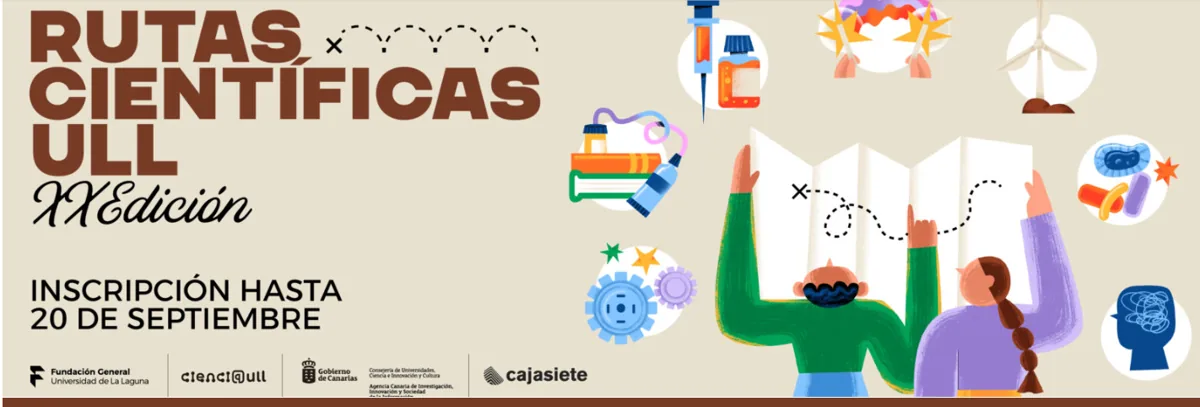
University of La Laguna
SpainUniversity of La Laguna opens its laboratories to Tenerife schools
ULL celebrates Researchers’ Night with 20 Science Routes for Primary, Secondary, Baccalaureate and Vocational Training students. Adapted to the school calendar, the activities will take place the week after Researchers’ Night, from 28 September to 2 October.
Read more
The University of La Laguna will bring its research activity closer to schools across Tenerife through its Science Routes, a public engagement initiative that will give students the opportunity to discover first-hand the spaces where university research takes place, interact with researchers and explore the applications of science across a wide range of fields.
Over five days, groups of up to 15 students, accompanied by their teachers, will be able to visit laboratories, research institutes and other facilities linked to university research.
Five days to discover ULL research
- 28 September – Art, social sciences and humanities: sculpture and restoration, music and phonetics, digital fabrication and art conservation.
- 29 September – Mathematics, physics, astrophysics, engineering and education: industrial and geological engineering, mathematics, physics and computer science, materials engineering and teacher education.
- 30 September – Biology, chemistry and pharmacy: the University Institute of Bio-Organic Chemistry, electrochemistry, chemistry and biochemistry.
- 1 October – Health sciences: biomedical technologies, medical sciences, nursing, toxicology, cellular immunology, tropical diseases and public health in the Canary Islands.
- 2 October – Psychology and neuroscience, economics and human resources, research and educational guidance, law, business and tourism.
The visits will take place in two sessions, from 9:00 to 11:00 and from 11:30 to 13:30. They are aimed at students in Years 5 and 6 of Primary Education, Secondary Education, Baccalaureate and Vocational Training.
Bringing research closer to the next generation
The Science Routes aim to spark young people’s interest in science and research and to help them discover the educational and career opportunities associated with different fields of knowledge. Direct contact with researchers also provides students with accessible role models and helps present research as an open, diverse activity connected to issues that affect everyday life.
Almost two decades of experience
The Science Routes have been running continuously since 2006 through the General Foundation of the University of La Laguna and have become one of the institution’s longest-standing science engagement initiatives. The programme is promoted by the University of La Laguna through Cienci@ULL, with the support of the Canary Islands Agency for Research, Innovation and Information Society (ACIISI) and Cajasiete.
University West
SwedenLearn more about AR and VR in our OpenLab. Get up close with an industrial robot in our Automation Lab. Borrow a researcher for your school class. Join “Breakfast with a Researcher.” Meet researchers and explore their work during a poster session.
Read more on the University West website (opens in a new tab)
- 2005Celebrated every year since
- 30+Countries taking part
- 350+Cities at the same time
- 1.5M+Visitors across Europe
Good to know
Do you want to know more about this special night?
Origins and history
European Researchers’ Night has been celebrated since 2005, promoted by the European Commission as part of the Union’s actions to bring science closer to the public.
When it takes place
It is held every year on the last Friday of September, coinciding with the start of European Researchers’ Week.
Why it was created
It was launched to make researchers’ work visible, to show how research contributes to addressing societal challenges, and to foster scientific vocations, especially among young people.
Reach
It is organised simultaneously in hundreds of cities in more than 30 countries (EU Member States and countries associated to Horizon Europe), with both in-person and online activities.
Impact
Since its first edition, it has brought together millions of participants, establishing itself as one of the largest science outreach events in Europe.
A fun fact
In many cities, the night is experienced as a “science festival”, with creative formats such as science in bars, open labs, shows, scientific city tours, and immersive experiences.
Did you know?
In some editions, more than 350 cities across over 30 countries have participated simultaneously, turning the night into one of the most synchronized science events in the world. In several locations, labs stay open until midnight for special experiments and night-time tours, while researchers take part in science shows, street performances, and even citizen-science activities where the public can contribute real data to ongoing projects.