
In2CoP 2026 strengthens co-creation and innovation in higher education within STARS EU
February 28, 2026
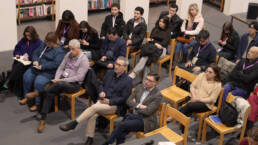
In2CoP 2026 – International Conference on Co-Creation Processes in Higher Education brought together the STARS EU community for three days of collaboration, innovation and knowledge exchange, hosted by Bragança Polytechnic University (IPB) within the framework of the STARS EU.
This edition placed a strong emphasis on STARS EU’s Thematic Interest Groups (TIGs), particularly Circular Economy and Arts & Creative Industries, fostering interdisciplinary approaches to address contemporary challenges in technology, sustainability, health and social intervention.
The conference gathered over 180 participants from 11 countries – Portugal, Brazil, Ireland, Poland, the Netherlands, Albania, Spain, Sweden, Germany, India and Norway – representing more than 20 higher education institutions, research centres and partner organisations.
Co-creation as a driver for innovation
Throughout the conference, more than 60 co-creation prototypes were presented by international, multidisciplinary teams, highlighting the strong link between education, research, creativity and societal impact.
Award-winning prototypes
Three outstanding prototypes were recognised with monetary awards, one per category: Technology – Designing a Game to Enhance Productivity and Engagement; Sustainability – Trachea Implants Made from Resilin-Based Materials and Health & Social Intervention – CuboNutri: An Educational Game for Building Balanced Lunchboxes.
A conference aligned with the STARS EU vision
Beyond plenary sessions, thematic panels and prototype presentations, In2CoP 2026 promoted networking, collaboration and strategic reflection on the future of European higher education.
The conference reaffirmed the shared commitment of STARS EU partners to a more collaborative, inclusive and innovation-driven higher education ecosystem, demonstrating how co-creation can be a key instrument in responding to social, economic and environmental challenges at regional and global levels.

Related Posts
STARS EU concludes annual conference in Opava with focus on becoming a European Alliance
A roadmap for growth: strategic planning and expansion with new university…

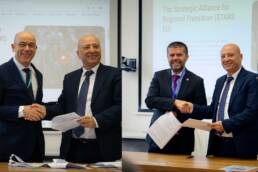
STARS EU welcomes two new international degree pathways through cooperation between UAMD, IPB and ULL
Both the double degree in Accounting and the dual doctoral programme in Law…
The STARS EU annual meeting began in Opava, focusing on teaching innovation
The annual conference of the STARS EU alliance was inaugurated yesterday,…