
ULL hosted the face-to-face session of a BIP on Machine Learning for Data Science
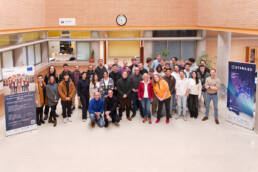
The University of La Laguna (Spain) hosted the live session of a BIP course on Machine Learning for Data Science for a week at the end of January. This is the third edition of the course and the first time the Spanish institution has hosted its in-person portion, specifically at its School of Engineering and Technology.
Around thirty students from institutions linked to this BIP attended: Hanze University of Applied Sciences (Netherlands), Hochschule Bremen-City University of Applied Sciences (Germany), Bragança Polytechnic University (Portugal) and the University of La Laguna itself, all part of STARS EU. Students from the Celso Suckow Federal Center for Technological Education in Fonseca (Brazil) also joined .
During the opening session, professors Juan Albino Méndez and Rafael Arnay, both from the Department of Computer and Systems Engineering at the University of La Laguna, presented the program for this week’s work, which focused primarily on mentoring practical projects developed in groups by the 32 participating students to be presented on Friday, January 23. Two seminars were also held: one on data analysis using Knime software and another on machine learning in energy systems.
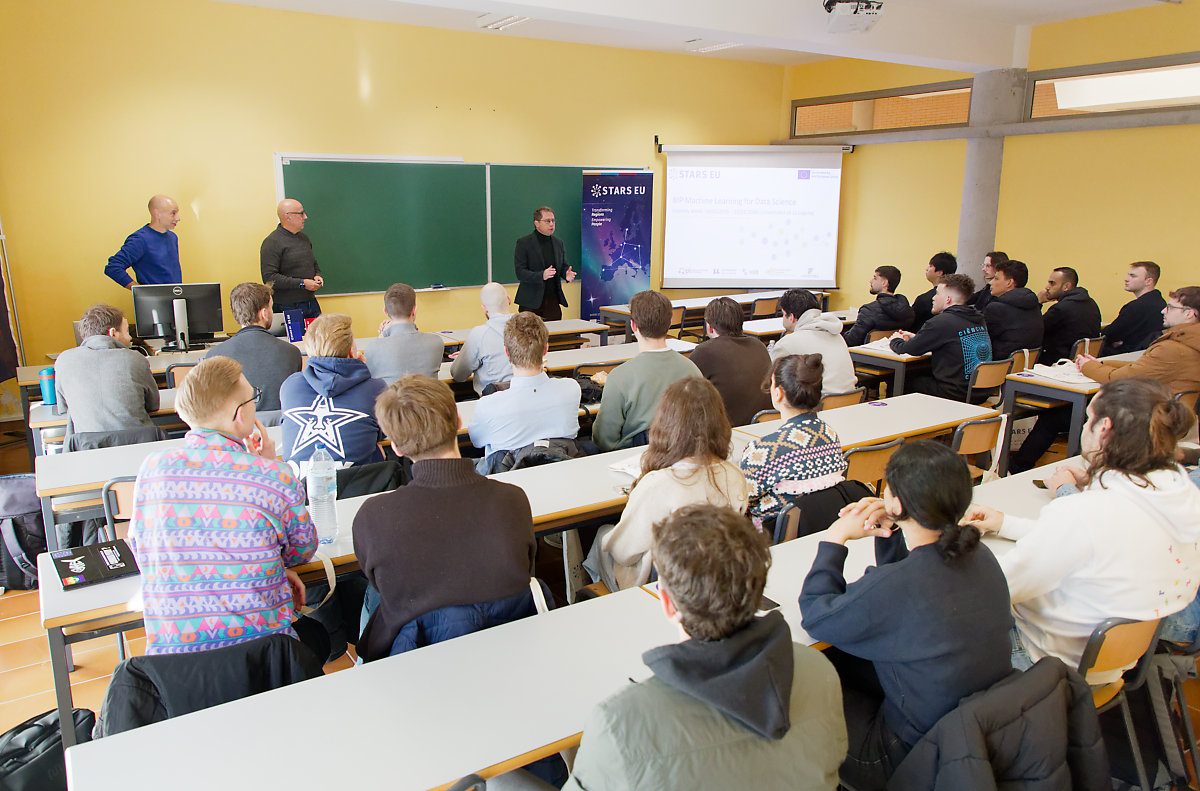 This BIP on Machine Learning in Data Science is worth 6 credits, corresponding to 60 hours of work, both in-person and online. During this practical week, students developed a hands-on Machine Learning project using real data provided by the instructors. They applied the methodologies described during the online instruction to develop a model that solved the proposed problem.
The course has been designed to explore different Machine Learning techniques , from basic concepts to advanced methods, and learn how to apply them to analyze complex datasets and extract meaningful information.
At the end of the course, students should be able to, among other objectives, discern what type of solution should be used; establish a chronological and functional view of AI techniques and their connections with other sciences; know the main models and implement them to solve practical problems; understand the limitations and advantages of computational intelligence techniques; and adapt AI techniques to specific case studies, for example, Pattern Recognition problems.
In addition to the aforementioned Juan Albino Méndez and Rafael Arnay from ULL, the teaching was provided by Uta Bohnebeck (Bremen); Rui Pedro Lopes (Braganza); Meriecke Bouma and Remi Thüss ( Hanze ); and Eduardo Bezerra (Fonseca), many of whom also traveled to Tenerife to tutor the face-to-face work .

Related Posts
STARS EU welcomes two new international degree pathways through cooperation between UAMD, IPB and ULL
Both the double degree in Accounting and the dual doctoral programme in Law…

The STARS EU annual meeting began in Opava, focusing on teaching innovation
The annual conference of the STARS EU alliance was inaugurated yesterday,…
STARS EU places education at the heart of Europe’s future in its third annual conference
The event, to be held at Silesian University in Opava, will take place from 25…