
A total of 56 STARS EU members enhance their training in intellectual property and knowledge transfer at ULL
June 26, 2026
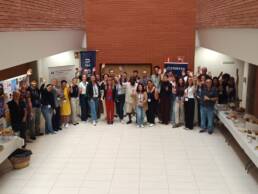
A total of 56 people from six of the nine universities that make up the European university alliance STARS EU, as well as specialists from other entities, took part between 22 and 24 June in an international workshop on intellectual property, knowledge transfer and commercialisation of research results held at the Faculty of Engineering and Technology of the University of La Laguna.
The First STARS EU Workshop on Intellectual Property and Commercialisation aimed to strengthen the training of young researchers in the protection of research results, intellectual property and market transfer, as well as to update knowledge among staff from the technology transfer offices of partner universities and foster the exchange of best practices in this field.
The meeting brought together 26 doctoral students, most of them from the Cracow University of Technology, along with young researchers, staff from research results transfer offices (TTOs) and entrepreneurs linked to R&D projects from the Silesian University in Opava; the Alexandër Moisiu University of Durrës; the University of Applied Sciences Bremen, and the University of the West, as well as staff from ULL.
According to Rodrigo Trujillo, coordinator of the STARS EU Transfer Office and organiser of the workshop together with the ULL TTO, the commercialisation of research requires “solid structures” that allow results with economic potential to be brought to the market under optimal conditions. “The goal is to ensure a return on public investment in research and to generate impact both in society and in strategic sectors,” he stressed.
Protection of innovation
The session, which was inaugurated by the Vice-Rector for Research and Transfer of the ULL, Antonio Aparicio, began with Violeta Arnáiz, Head of Intellectual Property, Artificial Intelligence and Software at PONS IP. The expert focused her intervention on the fundamentals of intellectual and industrial property, as well as on the protection of intangible assets derived from research.
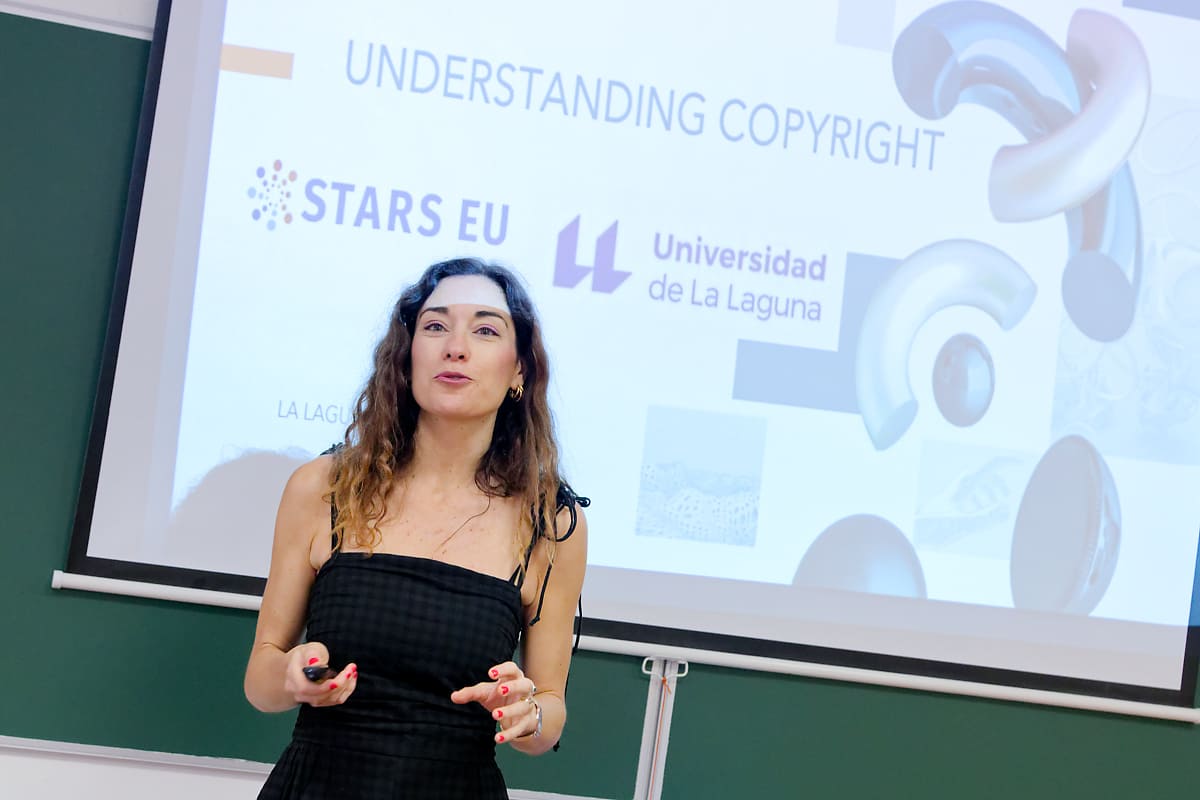
In this regard, she highlighted the importance of knowing, from the earliest stages of projects, the legal tools available to avoid “loss of ownership” and to foster a “strong culture” of innovation protection.
Arnáiz presented the main protection instruments, such as copyright, patents, trademarks, industrial designs and trade secrets, and analysed the impact of artificial intelligence on creation and research processes, as well as the management of technological assets and early collaboration agreements.
The second day, led by the Cracow University of Technology (CUT), focused on the management of intellectual property in collaborative research environments and in projects funded by the Horizon Europe programme. The plenary session was delivered by José Manuel Rodríguez, CEO of Wooptix, who presented the success story of this ULL spin-off, which has become one of the most prominent technological spin-offs in Spain and Europe’s innovation ecosystem, achieving international positioning through the development of advanced computational imaging technologies applied to highly demanding technological sectors.
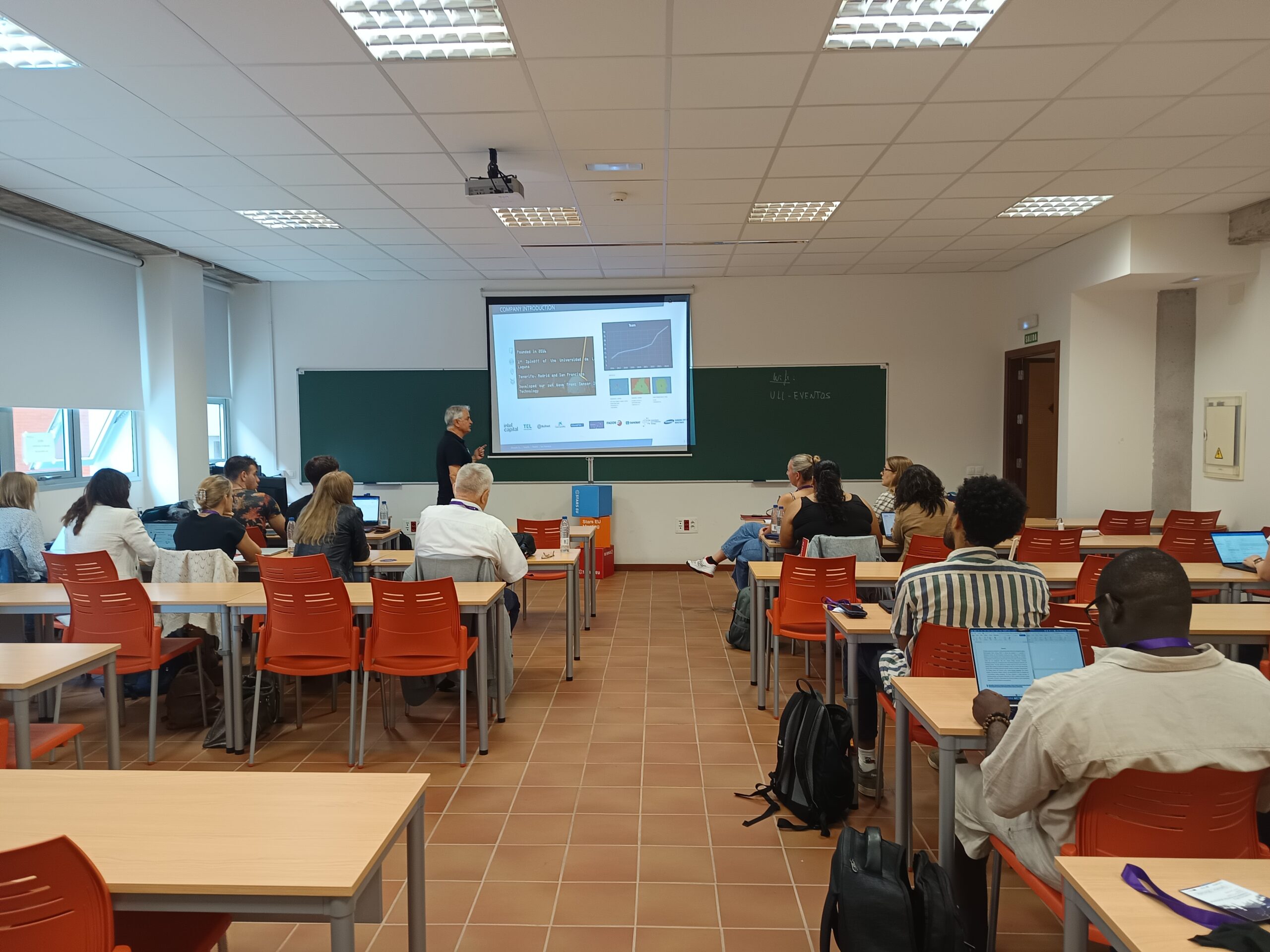
Subsequently, Irena Jakubiec, senior specialist at the Technology Transfer Centre of the Cracow University of Technology, detailed the processes of identifying and managing intellectual property in research projects, in particular the distinction between background and foreground knowledge, models for sharing rights between partners, confidentiality obligations and protection strategies within international consortia.
For his part, Jacek Kasz, director of the same centre, focused his contributions on academic entrepreneurship, value creation models based on research and different funding routes for technology startups, from early stages through scaling and market entry.
Transfer of scientific results
The third and final day was entirely devoted to transforming scientific results into market opportunities. In it, Marlena Marek presented the international SUCRED platform, aimed at training in the commercialisation of R&D activities. This was followed by a block led by Małgorzata Ciesielska and Irena Jakubiec focused on identifying opportunities for the exploitation of research results, market analysis, customer segmentation, competition analysis and the use of strategic tools such as SWOT analysis.
In the afternoon session, the focus was placed on advanced innovation management, with special attention to the technological maturity of scientific developments, the valuation of intellectual property, the identification of risks in commercialisation processes and the key aspects for establishing effective collaboration with industry. Negotiation techniques, preparation of proposals for industrial partners and strategies to maximise the impact of research results in the market were also addressed.
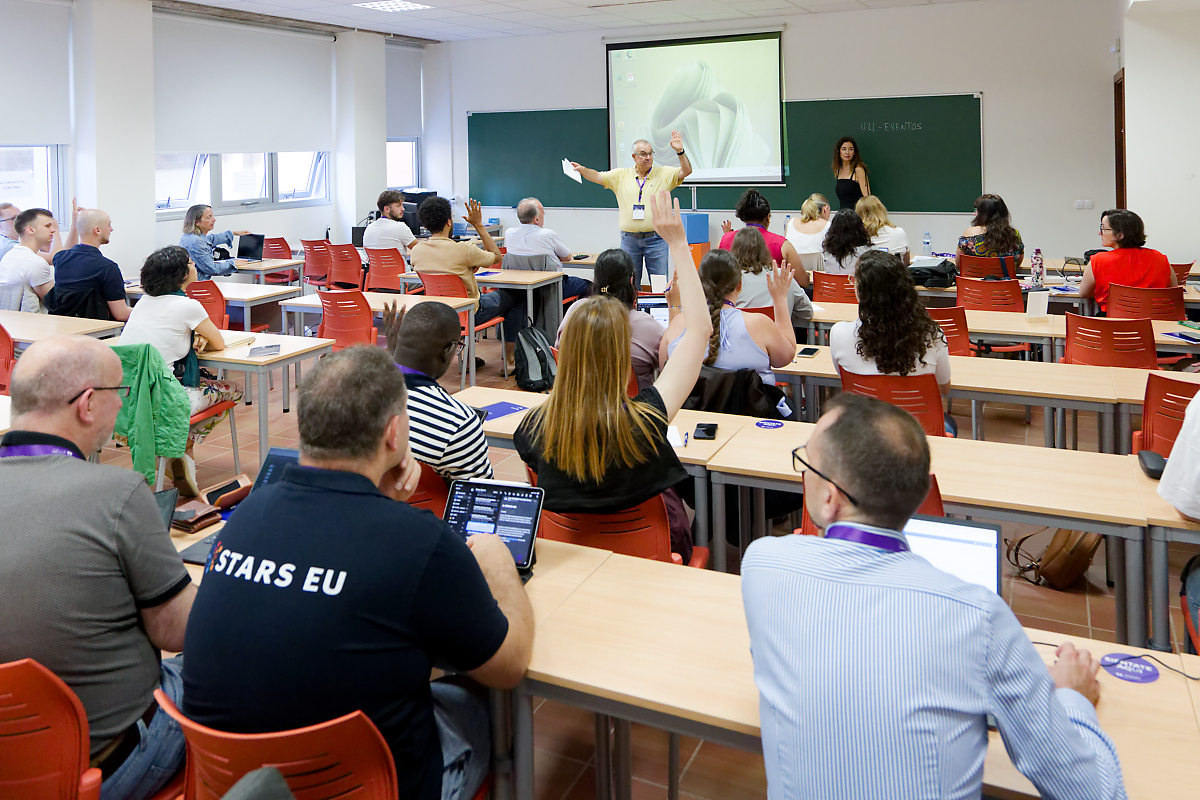
The training sessions combined theoretical presentations with practical dynamics oriented towards the direct application of the concepts developed, through the study of real cases. This is the first initiative of its kind within the STARS EU alliance, whose programme will continue with two further editions scheduled for September 2026 in France (Marie and Louis Pasteur University) and 2027 in Poland (Cracow University of Technology).

Related Posts
STARS EU Goes Global: Alliance community meets in Bragança for 2026 Annual Meeting
The STARS EU community will come together at Bragança Polytechnic University…

One song, Different voices, One STARS EU
Four of our university's choirs came together around one of the most iconic…
STARS EU researchers explore pilot projects for collaboration in tourism at ULL
The meeting brings together universities from Kraków and Bragança to lay the…