
La Laguna brought together around twenty international STARS EU students to address inclusive access to justice
April 29, 2026
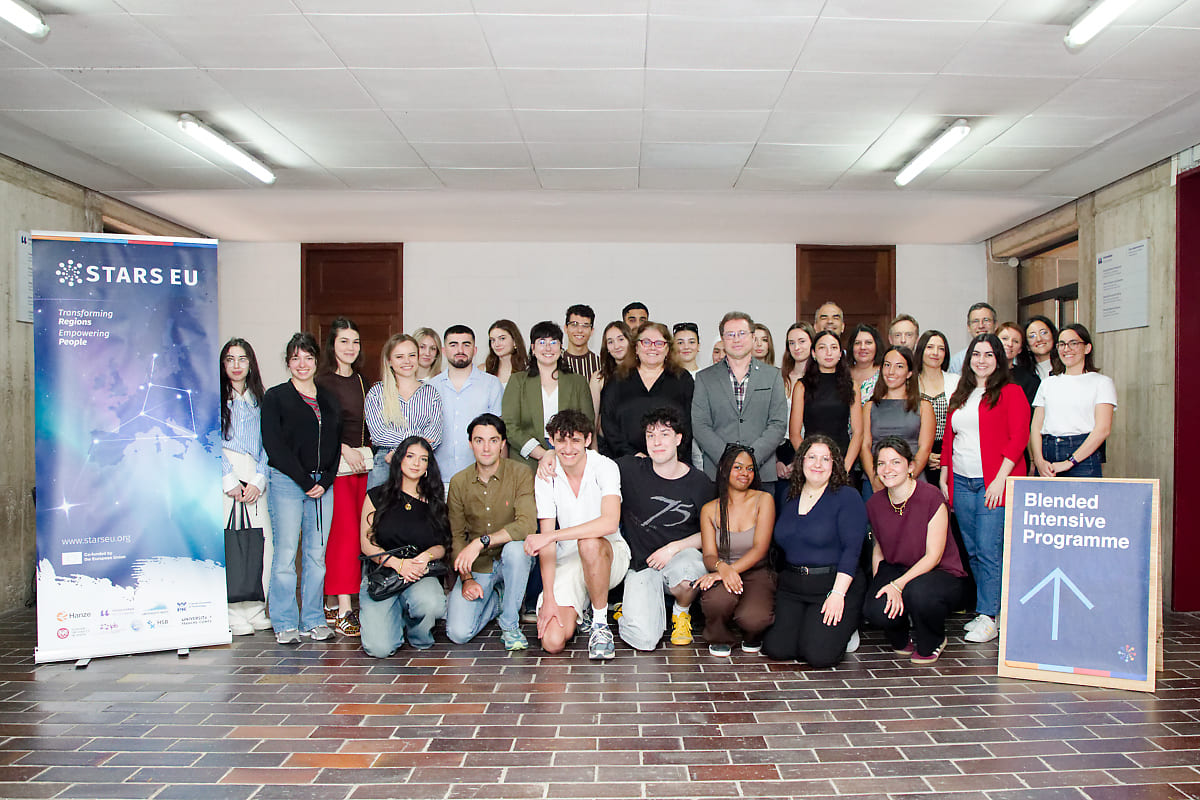
The Faculty of Law at the University of La Laguna recently hosted the Blended Intensive Programme (BIP) Justice in a Transformative Key, which brought together students and academic staff from Albania, France, and Germany, alongside students from ULL, with the aim of analysing access to justice from an inclusive, interdisciplinary, and socially transformative perspective.
The BIP began with the opening session led by José Sigut, Head of the Office for Mobility and Cooperation with Europe and North America and coordinator of the STARS EU alliance at ULL. He highlighted the positive reception of this programme, developed within the framework of Erasmus+ and European university alliances. Sigut also emphasized that this BIP “stands somewhat apart” from the alliance’s usual focus areas, such as industry, business, and engineering.
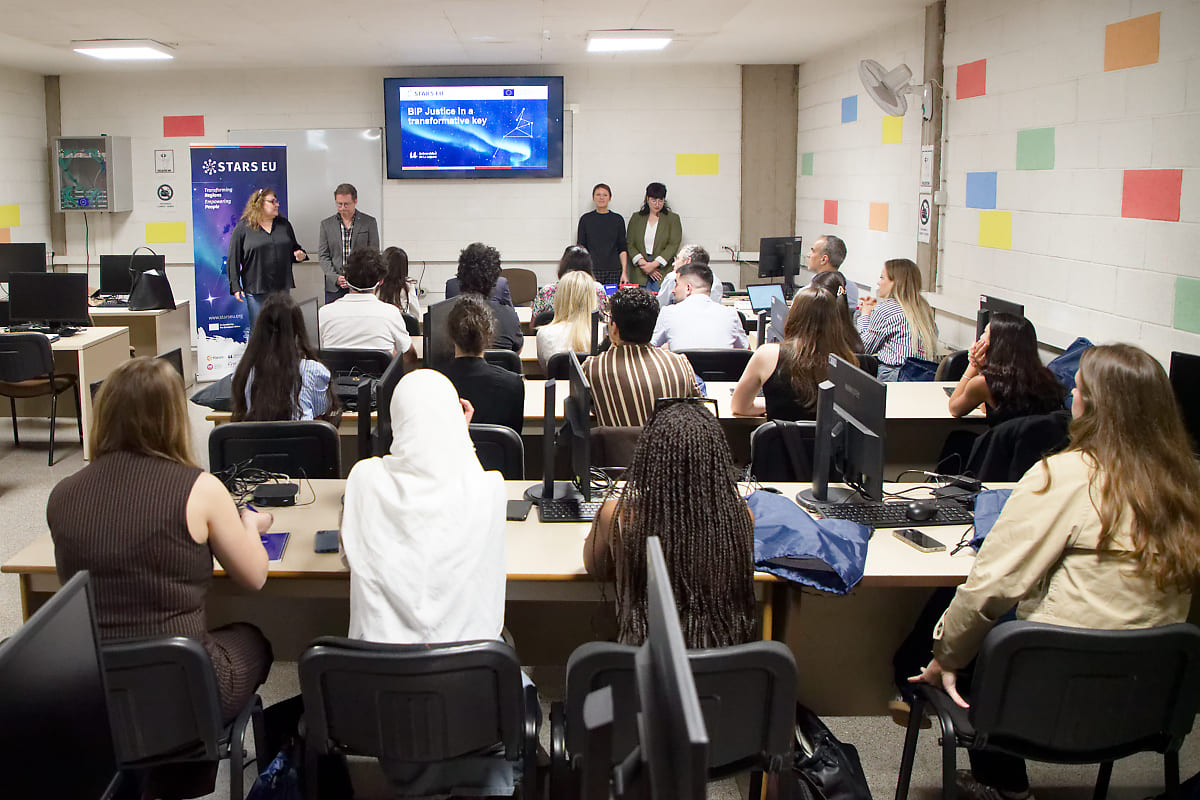
In this regard, Dulce Cairós, Dean of the Faculty of Law and coordinating organiser of the initiative, stressed that this first edition places the spotlight on the field of Law, and particularly on the construction of a more inclusive justice system capable of responding to current social challenges through a transversal and transformative approach.
The sessions, attended by 35 participants including students and lecturers from Aleksandër Moisiu University of Durrës (Albania), Hochschule Bremen – City University of Applied Sciences (Germany) Marie and Louis Pasteur University (France), and ULL, addressed topics such as labour precariousness and the protection of minors as vulnerable consumers.
The programme explored how social inequalities affect effective access to justice and examined the role academic institutions can play as “agents of change,” something illustrated through the presentation of ULL’s Social Innovation Laboratory.
Social exclusion and migrants
During the second day, the programme focused on contexts of social exclusion, paying particular attention to interventions in penitentiary institutions and the legal assistance provided to migrants. Special emphasis was placed on the importance of adopting interdisciplinary approaches to address complex realities and ensure more effective legal and social responses.
The BIP also addressed alternatives to the traditional justice system, including restorative justice and alternative dispute resolution mechanisms, viewed as key tools for promoting more inclusive, dialogue-based, and reparative solutions.
In the final days, attention shifted to particularly sensitive issues such as the situation of unaccompanied minors, age determination procedures, and the need to incorporate a gender perspective into the legal field.
The programme concluded with an evaluation and closing session in which students shared proposals aimed at advancing towards a more accessible, equitable, and people-centred model of justice.
In addition to the academic sessions, participants enjoyed cultural and leisure activities, including guided visits to San Cristóbal de La Laguna, Teide National Park, and the Izaña Atmospheric Observatory.

Related Posts

WEAVE 2027 – Call for Papers
The STARS EU community will come together at Bragança Polytechnic University…

STARS EU Goes Global: Alliance community meets in Bragança for 2026 Annual Meeting
The STARS EU community will come together at Bragança Polytechnic University…
One song, Different voices, One STARS EU
Four of our university's choirs came together around one of the most iconic…