

Ten years promoting circular economy and innovation in Tenerife
November, 25, 2026
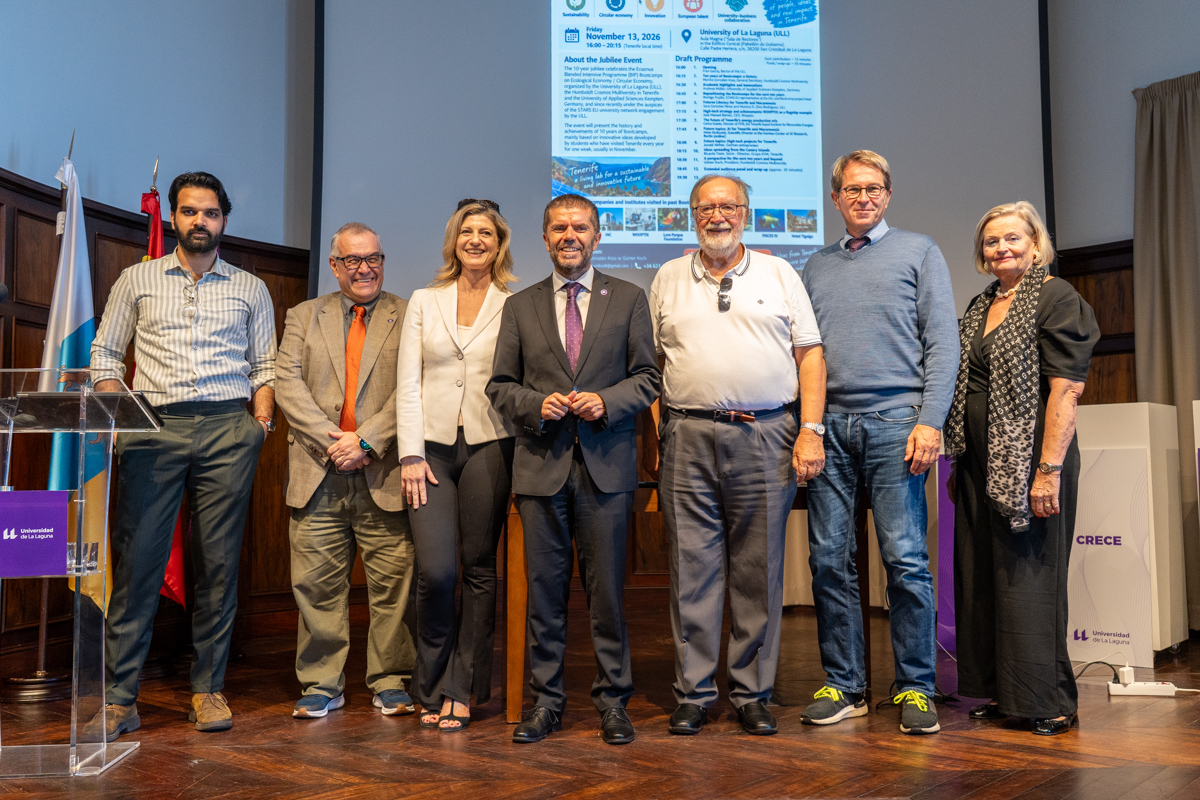
The University of La Laguna (Spain), together with the Humboldt Cosmos Multiversity Association and the Kempten University of Applied Sciences (Germany), recently celebrated the tenth anniversary of the Tenerife BIP Bootcamps in Circular Economy. Although its first editions were organized independently, for several years now the initiative has been sponsored by STARS EU.
The event, held under the theme “From Today’s Ideas to a More Sustainable Tenerife Tomorrow,” highlighted a decade of international cooperation, knowledge transfer, and collaboration between universities and businesses. For the past ten years, European students have visited Tenerife annually for a week to develop innovative solutions that will transform the island into a living laboratory for sustainability.
The day was opened by the rector of the University of La Laguna, Francisco García, reviewing the origin and evolution of this initiative that was born in 2016 after a meeting between Professor Andreas Müller (University of Kempten) and Günter Koch (president of HCM) at the Peter Drucker Global Forum in Vienna, materializing in 2017 with the first visit of German students to the island.
Monika Gonzalez-Koss, Secretary General of Humboldt Cosmos Multiversity , and Andreas Müller himself highlighted the main academic milestones and projects developed in collaboration with leading entities and companies in the Tenerife ecosystem.
The next ten years
The event also outlined the program’s strategic roadmap for the next ten years, aiming to integrate the initiative into a global climate risk reduction agenda and extend its reach to the whole of Macaronesia.
One of these objectives is the academic reorientation and literacy of future generations. Rodrigo Trujillo, representative of the University of La Laguna on the STARS EU steering committee and director of the Bootcamp project , addressed the repositioning of the program within the European network, while Sara González Pérez and Mónica D. Dios Rodríguez, also from the Tenerife institution, delved into the importance of Futures. Literacy (futures literacy) to anticipate scenarios in Tenerife and Macaronesia.
Regarding the energy transition in island systems, Carlos Suárez, director of ITER, analyzed the future of Tenerife’s energy mix, highlighting the strategic role of the islands as testing grounds for energy self-sufficiency, storage, and smart grids.
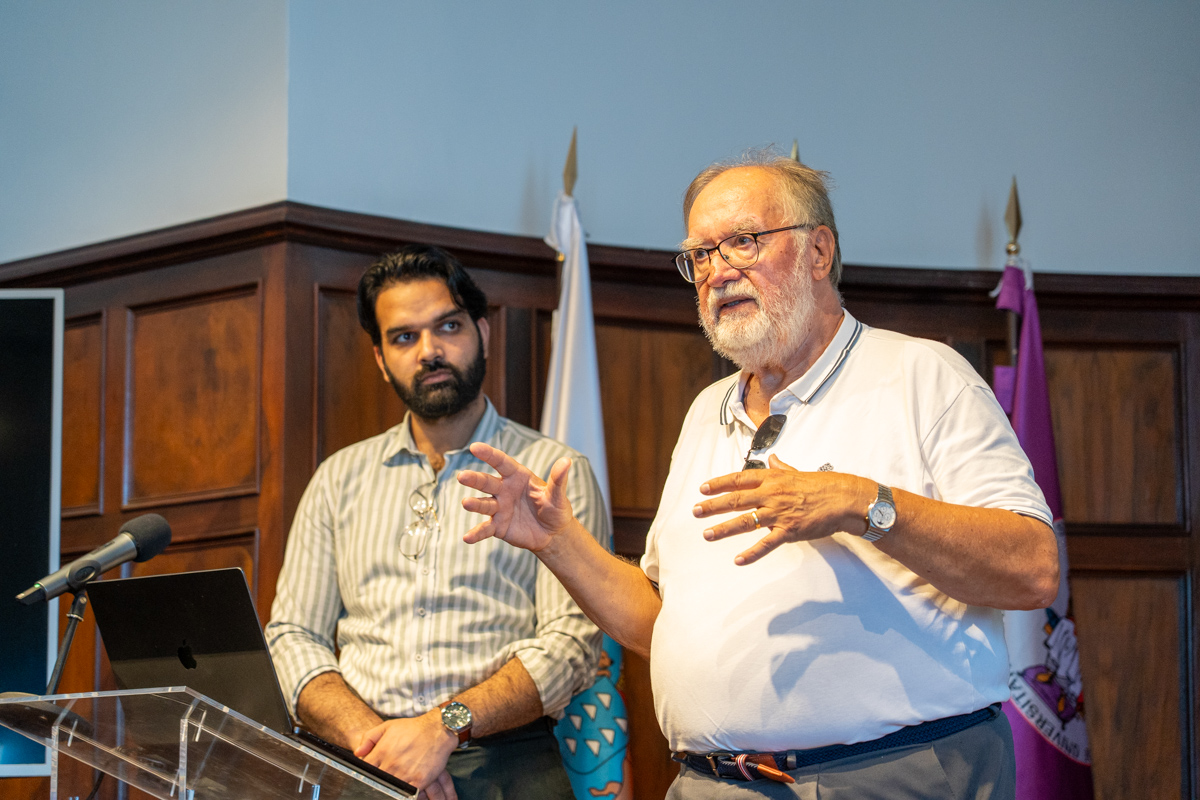 High technology and Artificial Intelligence are also among the concerns for the next decade, and in this regard, the potential of the Canary Islands as a destination for technological investment was highlighted in the presentations by Hans Uszkoreit, scientific director of the German Research Center for Artificial Intelligence (DFKI) in Berlin, who participated remotely to analyze the impact of AI in the region; and the German entrepreneur Junaid Akther, focused on future high-tech projects for Tenerife.
Regarding the challenge of international projection, Ricardo Tavío (managing partner of Grupo EVM) shared his vision on how to export ideas generated in the Canary Islands abroad. Finally, Günter Koch, president of HCM, closed the series of presentations by offering a future perspective based on strengthening European alliances, such as the ERCIM network, and securing international funding to promote sustainable innovation.
The session concluded with an open debate with the audience and an institutional reception, reaffirming the commitment of the organizing entities to continue connecting young talent, science and productive fabric from Tenerife to the world.

Related Posts
ULL introduces a New Living Lab on Circular Economy
STARS EU alliance presented its new Circular Economy Living Lab (CELL) at the…

The STARS EU alliance consolidates its long-term commitment in Bragança by signing a Consortium Agreement
The signing of a Consortium Agreement by the nine university rectors and the…
STARS EU Student Case Competition returns to France with an entrepreneurship challenge
Hosted by the University Marie and Louis Pasteur from 9 to 18 November, the…