
ULL brings together STARS EU researchers to explore pilot projects for collaboration in tourism
October, 6, 2026
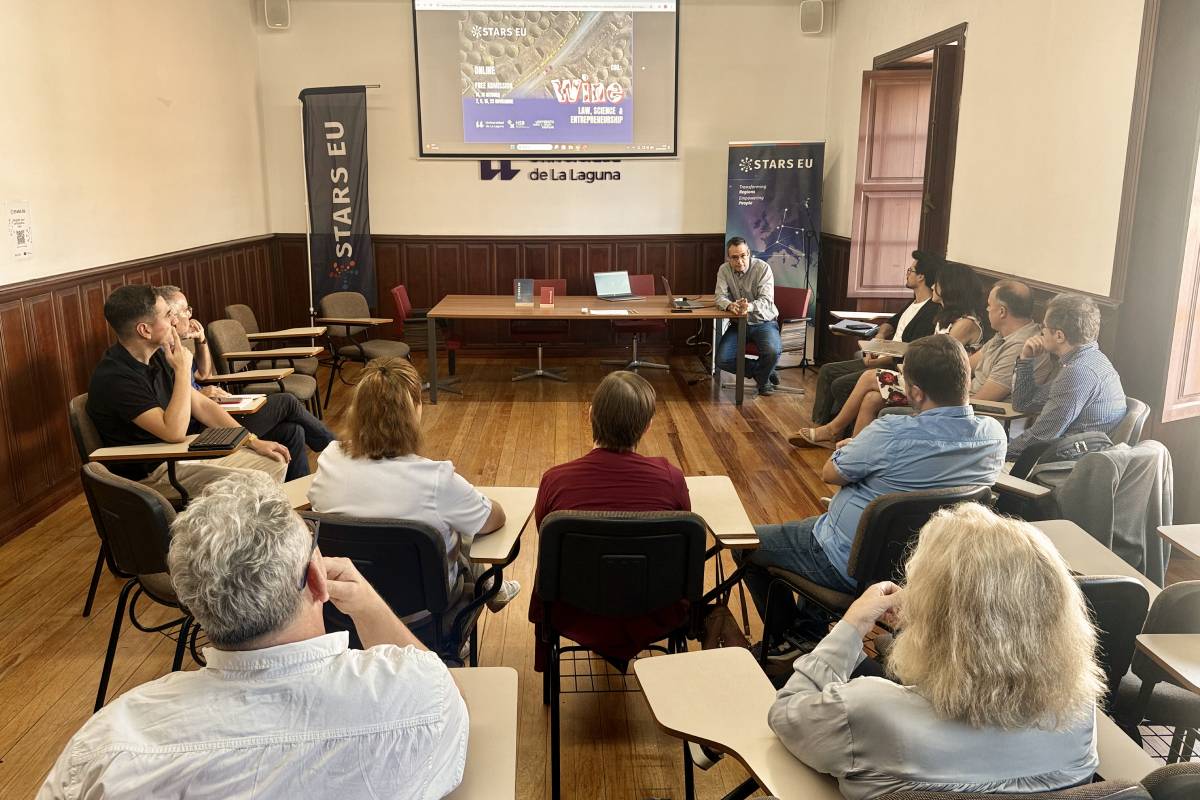
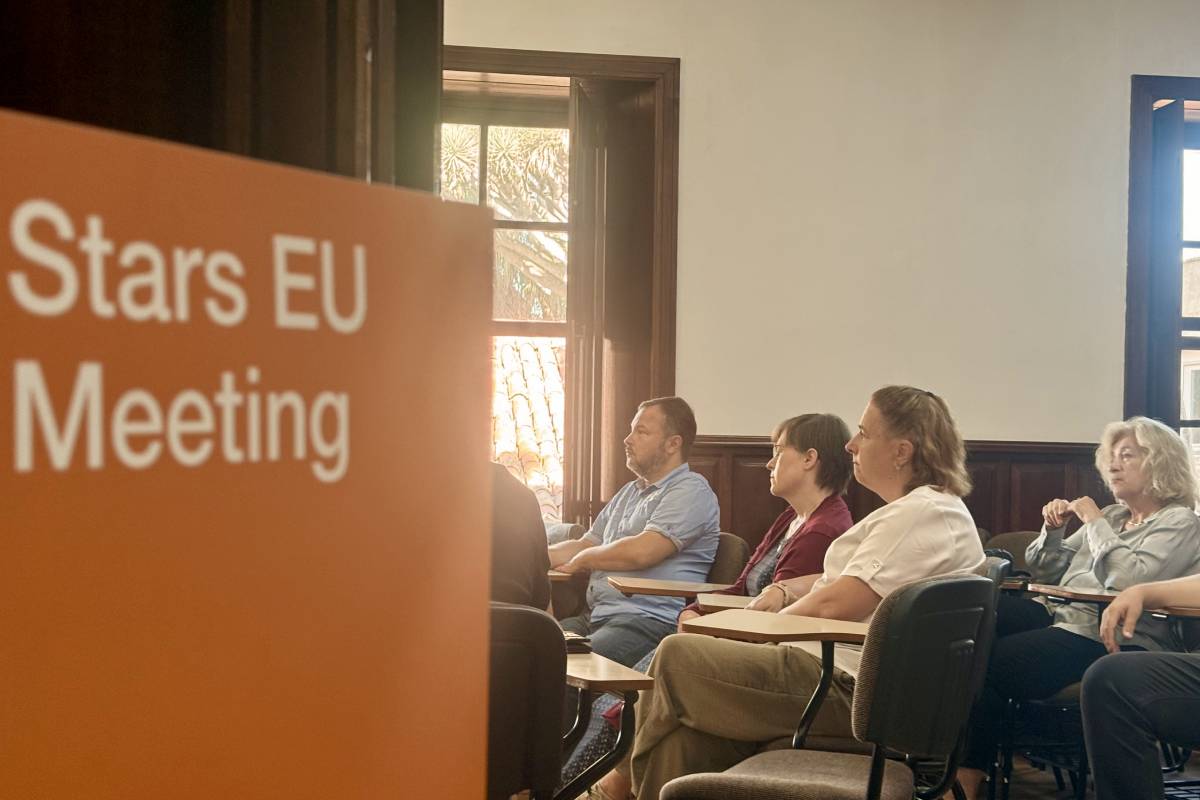
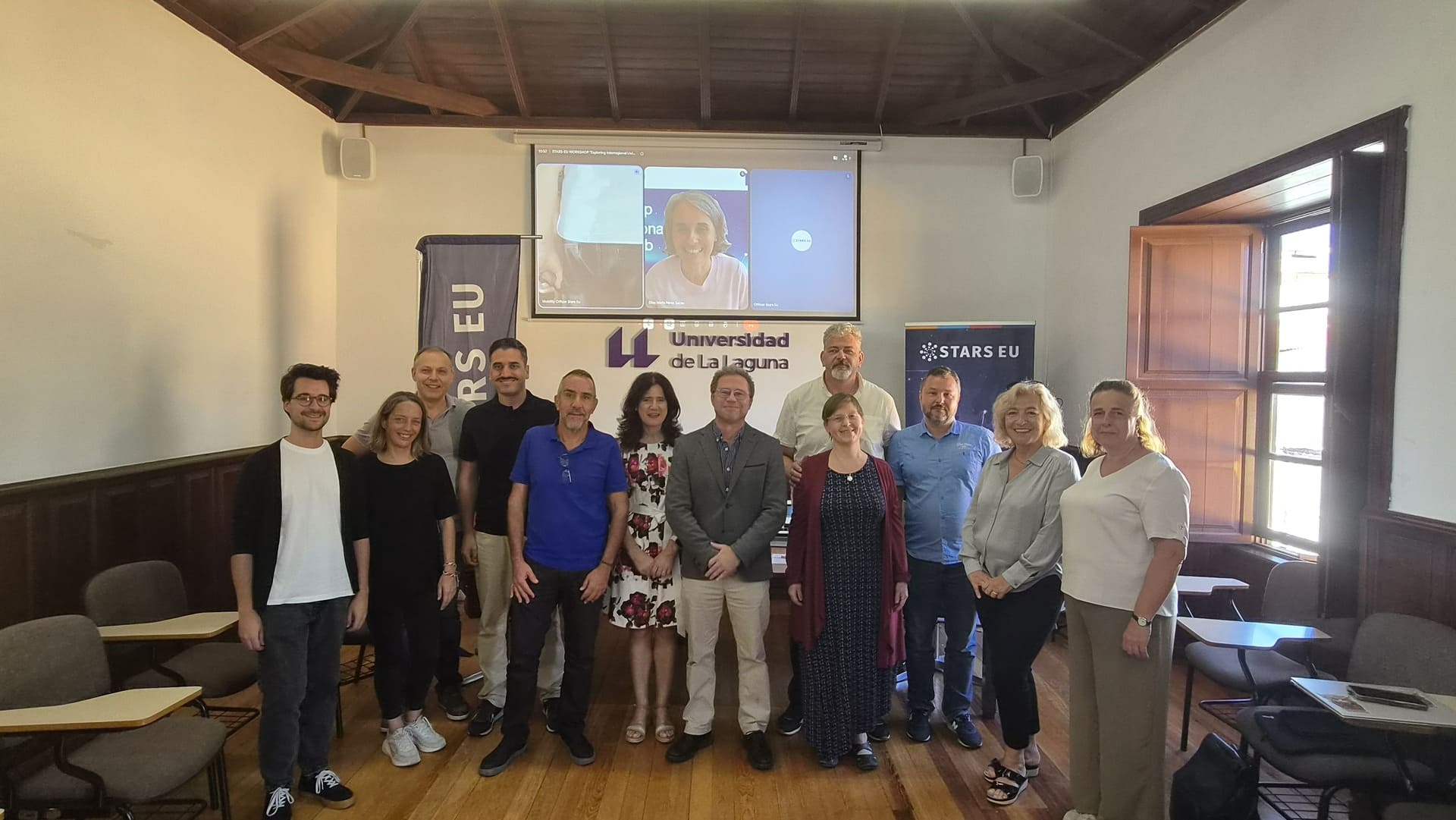 The University of La Laguna (Spain) recently hosted a STARS EU meeting aimed at exploring potential pilot projects of common interest in the tourism sector and advancing the definition of the Interregional Tourism Living Lab, a future living lab focused on interregional tourism.
The workshop brought together researchers and specialists at the Vice-Rectorate for Internationalisation and Cooperation, home to STARS EU, from the Cracow University of Technology (Poland), the Polytechnic University of Bragança (Portugal) and the University of La Laguna. The meeting sought to identify interregional challenges and opportunities, define possible areas for joint work and establish the next steps in the development of this Living Lab.
The initiative follows the partners’ agreement to explore an interregional Living Lab focused on tourism. In the specific case of ULL, the meeting provided an opportunity to contribute to and complement the Circular Tourism Pilot, developed within the Circular Economy Living Lab promoted by the University of La Laguna, which will become operational shortly.
According to the STARS EU coordinator at ULL, José Sigut, “this international meeting represents an important boost for our university’s Circular Economy Living Lab (CELL). Interaction with experts from Kraków and Bragança directly enriches our own Circular Tourism Pilot and provides a global perspective while complementing the transversal areas in which we are already working, such as ecotourism and cultural heritage as a tourism resource.”
Specialised expertise
The programme, developed over two days of work, brought together professionals involved in different areas of research, innovation and education related to tourism and its surrounding fields. ULL was represented by specialists from the Tourism Chair, the ReinvenTUR research group, the Agrotourism and Wine Tourism Chair, and the Interdisciplinary Research Group on Agrotourism (GIIA), among others.
Cracow University of Technology contributed expertise in architecture, fine arts, smart cities, urban and regional design, mechanical engineering, and environmental and energy engineering, as well as tourism related to spas and rural environments, one of the region’s strongest areas of focus. The Polytechnic University of Bragança, meanwhile, presented the areas of work developed through its School of Tourism and its Research Center in Tourism, contributing specialised knowledge in the tourism sector, particularly in the fields of nature tourism and thermal tourism.
 Potential pilot projects
According to Sigut, this diversity of expertise will make it possible to explore potential links between research, education and innovation, as well as identify areas where collaboration between the different regions could translate into “concrete pilot projects”.
The programme began on 28 September with a visit to the bioclimatic houses of the Institute of Technology and Renewable Energies (ITER). This was followed in the afternoon by presentations from the participating universities on their research groups, projects and areas of specialisation related to tourism.
Following the presentations, the second day concluded with a joint session aimed at identifying interregional challenges and opportunities, potential pilot activities, and the partners and external stakeholders who could participate in them.
Potential areas of work include ecotourism and cultural heritage as a tourism resource, as already mentioned, as well as sustainable tourism, gastronomic tourism, and specific segments such as medical tourism and wellness tourism, alongside other transversal areas related to the sector.
Once all the proposals presented have been analysed, those with the greatest potential for collaboration can be identified, possible responsibilities defined and the next steps for the Interregional Tourism Living Lab established.
Through this collaboration, STARS EU continues to connect the specialised knowledge of its universities with the challenges and opportunities of their regions, creating new spaces for research, innovation, education and sustainable regional development, one of its main objectives.

Related Posts
STARS EU brings together researchers from European universities to address human vulnerability from a social justice perspective
The meeting, organized by the Université Marie et Louis Pasteur, analyzes legal…


STARS EU puts intercultural education on the agenda in new workshop for teaching staff
The “Intercultural Education and Classroom Management” online workshop,…
FutureLab Camp 2027: Join a European team and tackle real-world challenges
Do you want to showcase your skills while working on an exciting project…