

STARS EU Highlights launches its second season with an episode dedicated to GEDI
November, 5, 2026

Gender equality, diversity, and inclusion (GEDI) are essential factors for improving academic quality, attracting and retaining talent, and strengthening the social impact of universities. This is one of the main conclusions of the episode “Gedi in Academia: Why gender equality, diversity and inclusion matter” that kicks off the second season of STARS EU Highlights, the alliance’s video podcast that provides a meeting space to share ideas, experiences, and perspectives on innovation and the challenges facing higher education in Europe. It can be watched at the STARS EU YouTube Channel and Spotify.
With this new season, the Bragança Polytechnic University (IPB) takes over from the University of La Laguna (ULL), which spearheaded the initiative in Tenerife, to ensure the continuity of this space for dialogue, open to both the STARS EU academic community and its partners. The goal is to foster knowledge exchange, showcase new ideas, and discuss the transformations required in higher education.
Recorded in Tenerife during the first season, this episode brings together Katerina Strati, expert in Philology and English for Specific Purposes and specializing in English language teaching (TEFL) from Aleksandër Moisiu University of Durrës, and Alicja Potrąk-Filipowska, expert in Applied Linguistics and Technical English Didactics, specializing in English language instruction within higher education and engineering contexts, from PK Kracow University of Technology (KUT). The host is Cecilia Becerra, from University of La Laguna.
Diversity to boost talent and research
During the conversation, both experts emphasize that gender equality, diversity, and inclusion must be addressed in a “transversal” manner—from access to university and participation in academic life to representation in decision-making bodies, well-being, and equal professional opportunities.
Both agree that these policies not only contribute to creating fairer and safer university environments but also enrich research and teaching. Diversity of experiences and perspectives fosters collaboration, helps identify blind spots, and opens up new avenues for innovation. Furthermore, it strengthens the universities’ capacity to attract students and faculty, as well as to cultivate a stronger sense of belonging among their members.
Shared strategy in STARS EU
The episode also addresses the value of cooperation among European universities to advance in this area. Within the framework of STARS EU, participating institutions have been able to compare their policies, share best practices, and identify potential lines of joint action regarding gender equality, diversity, and inclusion.
This episode of STARS EU Highlights continues this conversation in its second season, remaining true to its aim of connecting the university community and providing a space to enrich the higher education experience.

Related Posts
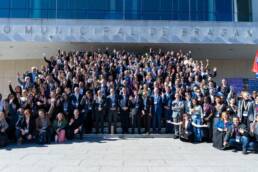
The STARS EU alliance consolidates its long-term commitment in Bragança by signing a Consortium Agreement
The new strategic Plan, extending to 2037, sets out the alliance’s priorities…

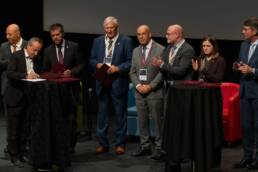
STARS EU and Petro Mohyla Black Sea National University formalize strategic partnership in Bragança
The agreement with the Ukrainian university promotes academic cooperation, as…

STARS EU Annual Meeting 2026 kicks off tomorrow in Bragança
Bragança Polytechnic University will welcome representatives from the nine…